Sebanyak 243 item atau buku ditemukan

G. Philosophy of Religion and General Philosophy

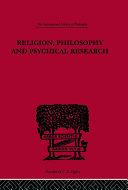
This set contains an exciting mix of volumes which will be of interest to a range of readers. Religion, Philosophy and Psychical Research, by the eminent philosopher C. D. Broad looks at psychical research, religion and politics. Speculations, published in 1924, is an edited selection from T. E. Hulme's notebooks and unpublished manuscripts, containing essays on humanism and the philosophy of art. The Philosophy of Music, also published in 1924, was one of the first studies to apply philosophy to music. Exploring the meaning and structure of music and the science of acoustics, this volume will attract those people interested in how perceptions of music have changed in almost eighty years. Reasons and Faiths describes the nature of religious doctrines and concepts, including discussions of Buddhism and Hinduism.

This set contains an exciting mix of volumes which will be of interest to a range of readers. Volumes include Religion, Philosophy and Psychical Research and The Philosophy of Music.

A Treatise of Legal Philosophy and General Jurisprudence

Vol. 9: A History of the Philosophy of Law in the Civil Law World, 1600-1900; Vol. 10: The Philosophers' Philosophy of Law from the Seventeenth Century to Our Days.

TO VOLUMES 9 AND 10 OF THE TREATISE I am happy to present here the third batch of volumes for the Treatise project: This is the batch consisting of Volumes 9 and 10, namely, A History of the P- losophy of Law in the Civil Law World, 1600–1900, edited by Damiano Canale, Paolo Grossi, and Hasso Hofmann, and The Philosophers’ Philosophy of Law from the Seventeenth Century to Our Days, by Patrick Riley. Three v- umes will follow: Two are devoted to the philosophy of law in the 20th c- tury, and the third one will be the index for the entire Treatise, which will 1 therefore ultimately comprise thirteen volumes. This Volume 9 runs parallel to Volume 8, A History of the Philosophy of Law in the Common Law World, 1600–1900, by Michael Lobban, published in 2007. Volume 10, for its part, takes up where Volume 6 left off: which appeared under the title A History of the Philosophy of Law from the Ancient Greeks to the Scholastics (edited by Fred Miller Jr. in association with Carrie-Ann Biondi, likewise published in 2007), and which is mainly a history of the p- losophers’ philosophy of law (let us refer to this philosophy as A).

TO VOLUMES 9 AND 10 OF THE TREATISE I am happy to present here the third batch of volumes for the Treatise project: This is the batch consisting of Volumes 9 and 10, namely, A History of the P- losophy of Law in the Civil Law World, ...

Elements of General Philosophy

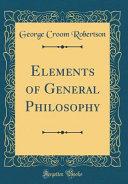
Excerpt from Elements of General Philosophy That I have been able to compile a second volume of lectures delivered by the late George Croom Robertson is again due, in the first place, to the kindness of Mr. Charles Robertson in placing at my disposal the MS. notes left by the professor, and, in the second place, to the ready help afforded me, through the loan of their note-books, by those students to whom I acknowledged my debt of gratitude in the Elements of Psychology, and to whom I here once more express my grateful obligation. About the Publisher Forgotten Books publishes hundreds of thousands of rare and classic books. Find more at www.forgottenbooks.com This book is a reproduction of an important historical work. Forgotten Books uses state-of-the-art technology to digitally reconstruct the work, preserving the original format whilst repairing imperfections present in the aged copy. In rare cases, an imperfection in the original, such as a blemish or missing page, may be replicated in our edition. We do, however, repair the vast majority of imperfections successfully; any imperfections that remain are intentionally left to preserve the state of such historical works.

About the Publisher Forgotten Books publishes hundreds of thousands of rare and classic books. Find more at www.forgottenbooks.com This book is a reproduction of an important historical work.

Elements of General Philosophy (Classic Reprint)

Excerpt from Elements of General Philosophy Mr. Thomas Whittaker when going through the proofs. I am also indebted for kind advice and cordial help to Professor Knight. Excepting the full draft of an Introductory Lecture on the History of Philosophy, which has been collated with students' note-books to form Lectures III-VI, the-author's own materials have been wrought up almost wholly in Part II. For instance, in the concluding three lectures on Kant they practically superseded my having recourse to reports of college lectures. It so happened that, although the professor had more than once had occasion to give college lectures on this subject, only one set of notes on Kant had come into my hands. About the Publisher Forgotten Books publishes hundreds of thousands of rare and classic books. Find more at www.forgottenbooks.com This book is a reproduction of an important historical work. Forgotten Books uses state-of-the-art technology to digitally reconstruct the work, preserving the original format whilst repairing imperfections present in the aged copy. In rare cases, an imperfection in the original, such as a blemish or missing page, may be replicated in our edition. We do, however, repair the vast majority of imperfections successfully; any imperfections that remain are intentionally left to preserve the state of such historical works.

About the Publisher Forgotten Books publishes hundreds of thousands of rare and classic books. Find more at www.forgottenbooks.com This book is a reproduction of an important historical work.

General Will in Political Philosophy

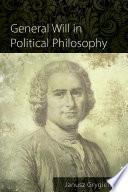
This book deals with the role and place of the general will in modern and contemporary political thought. This project is carried out at the crossroads of the history of ideas and political philosophy. It extensively develops historical and philosophical themes, showing modifications to the idea of the general will in the writings of thinkers who sometimes represent very distant epochs. The author tracks down the birth and the development of the idea of the general will in ancient, medieval, modern and contemporary times, devoting most of the book to the thoughts of Jean Jacques Rousseau and nineteenth and twentieth century British idealists.

This book deals with the role and place of the general will in modern and contemporary political thought.

General Philosophy of Science: Focal Issues

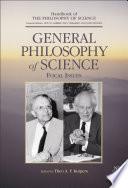
Scientists use concepts and principles that are partly specific for their subject matter, but they also share part of them with colleagues working in different fields. Compare the biological notion of a 'natural kind' with the general notion of 'confirmation' of a hypothesis by certain evidence. Or compare the physical principle of the 'conservation of energy' and the general principle of 'the unity of science'. Scientists agree that all such notions and principles aren't as crystal clear as one might wish. An important task of the philosophy of the special sciences, such as philosophy of physics, of biology and of economics, to mention only a few of the many flourishing examples, is the clarification of such subject specific concepts and principles. Similarly, an important task of 'general' philosophy of science is the clarification of concepts like 'confirmation' and principles like 'the unity of science'. It is evident that clarfication of concepts and principles only makes sense if one tries to do justice, as much as possible, to the actual use of these notions by scientists, without however following this use slavishly. That is, occasionally a philosopher may have good reasons for suggesting to scientists that they should deviate from a standard use. Frequently, this amounts to a plea for differentiation in order to stop debates at cross-purposes due to the conflation of different meanings. While the special volumes of the series of Handbooks of the Philosophy of Science address topics relative to a specific discipline, this general volume deals with focal issues of a general nature. After an editorial introduction about the dominant method of clarifying concepts and principles in philosophy of science, called explication, the first five chapters deal with the following subjects. Laws, theories, and research programs as units of empirical knowledge (Theo Kuipers), various past and contemporary perspectives on explanation (Stathis Psillos), the evaluation of theories in terms of their virtues (Ilkka Niiniluto), and the role of experiments in the natural sciences, notably physics and biology (Allan Franklin), and their role in the social sciences, notably economics (Wenceslao Gonzalez). In the subsequent three chapters there is even more attention to various positions and methods that philosophers of science and scientists may favor: ontological, epistemological, and methodological positions (James Ladyman), reduction, integration, and the unity of science as aims in the sciences and the humanities (William Bechtel and Andrew Hamilton), and logical, historical and computational approaches to the philosophy of science (Atocha Aliseda and Donald Gillies). The volume concludes with the much debated question of demarcating science from nonscience (Martin Mahner) and the rich European-American history of the philosophy of science in the 20th century (Friedrich Stadler). Comprehensive coverage of the philosophy of science written by leading philosophers in this field Clear style of writing for an interdisciplinary audience No specific pre-knowledge required

While the special volumes of the series of Handbooks of the Philosophy of Science address topics relative to a specific discipline, this general volume deals with focal issues of a general nature.

Bahasa Indonesia Bahasa Kita

Akan Diganti Dengan Bahasa Inggris

Suara yang menyatakan kecemasannya terhadap masa depan bahasa Indonesia kian banyak terdengar. Orang mengeluh tentang kemampuan para pelajar dan mahasiswa, bahkan para guru dan para sarjana berbahasa Indonesia yang kian rendah. Orang mengeluh tentang kian banyaknya akronim, sehingga kalimat-kalimat yang dibaca hampir tak dapat dipahami. Orang mengeluh tentang bahasa Indonesia yang tadinya demokratis menjadi kian feodalistis. Orang mengeluh tentang pengaruh bahasa Betawi melalui televisi, radio, filem, dan Iain-lain media massa—mengalahkan kampanye berbahasa dengan "baik dan benar" Pusat Bahasa. Kekurangmampuan itu tidak bisa diatasi hanya dengan kampanye berbahasa Indonesia dengan "baik dan benar" saja. Hal itu merupakan akibat dari pengajaran bahasa selama ini yang tidak mencapai sasaran, baik di rumah maupun di sekolah, begitu juga dalam kehidupan bermasyarakat. [Pustaka Jaya, Dunia Pustaka Jaya]]

Suara yang menyatakan kecemasannya terhadap masa depan bahasa Indonesia kian banyak terdengar.

Perencanaan Pembangunan

Banyak pejabat daerah hanya memiliki dokumen perencanaan daerah, tetapi tidak peduli substansi perencanaan visi daerah mau dibawa ke mana, dan apa masalah mendasar yang dihadapi oleh daerah. Perencanaan Pembangunan Daerah membutuhkan identifi kasi dan pemahaman: sistem perencanaan pembangunan nasional/daerah; jenis perencanaan; sumber daya yang dimiliki; masalah mendasar yang dihadapi; komoditi/ jasa/sektor unggulan, arah, dan tujuan yang ingin dicapai; indikator kinerja utama; pembiayaan pembangunan; integrasi dimensi sektoran dan wilayah; serta formulasi visi-misi-strategi. Fokus buku ini adalah bagaimana memanfaatkan teori dan konsep perencanaan untuk membangun ekonomi lokal, kota, dan kawasan. **** “Berbekal pengalaman blusukan ke seluruh wilayah Indonesia, Prof. Mudrajad mampu menyajikan betapa teori perencanaan juga membutuhkan ‘seni’ ketika diaplikasikan di Indonesia yang amat ‘bhinneka’. Studi kasus di berbagai daerah provinsi, kabupaten, dan kota yang ditampilkan dalam buku ini memperkaya kita dalam memahami kompleksitas masalah dan beragamnya potensi, menyusun strategi yang membutuhkan kejelian, dan menangkap peluang membangun daerah. “ — Prof. Bambang Permadi Soemantri Brodjonegoro, Ph.D. Menteri Perencanaan Pembangunan Nasional/Kepala Bappenas, Kabinet Kerja 2014–2019 “Buku teks yang diramu dengan konteks empiris kasuistik ini dimaksud untuk mengisi minimnya buku tentang Perencanaan Daerah yang yang secara komprehensif-simultan memuat empat aspek (politik, hukum, administrasi, dan fi skal) dengan contoh-contoh aplikasi ‘best pratices’ di daerah yang diteliti. Meski cukup tebal, buku ini enak dan perlu dibaca, terutama oleh para birokrat, karena dapat menjadi rujukan praktis dalam perencanaan daerah yang berorientasi pada proses, mulai dari mengidentifi kasi dokumen, merumuskan visi-misi, menetapkan kebijakan, memilih strategi, dan mengimplementasikan program untuk membangun ekonomi lokal berbasis potensi unggulannya.” — Sri Sultan Hamengku Buwono X Gubernur Provinsi DIY “Buku ini ditulis dengan sangat komprehensif, yang ditinjau dari beberapa aspek penting, seperti aspek politik, hukum administrasi, dan fi skal, serta disuguhkan dengan contoh-contoh aplikasi kusus perencanaan pembangunan daerah yang dianggap telah berhasil. Membaca buku ini akan menambah wawasan dalam usaha memahami pentingnya perencanaan yang baik dalam pembangunan daerah. Oleh karena itu, buku ini wajib dibaca oleh para praktisi daerah, seperti kepala daerah, anggota DPRD, dan pejabat daerah lainnya.” — Dr. Sinyo Herry Sarundajang Gubernur Provinsi Sulawesi Utara (2005-2015) & Dubes RI di Filipina

Perencanaan Pembangunan Daerah membutuhkan identifi kasi dan pemahaman: sistem perencanaan pembangunan nasional/daerah; jenis perencanaan; sumber daya yang dimiliki; masalah mendasar yang dihadapi; komoditi/ jasa/sektor unggulan, arah, dan ...